

JPMR for Anxiety Relief?

JPMR for Anxiety Relief?

JPMR for Anxiety Relief? Jacobson’s Progressive Muscle Relaxation (PMR), also known as JPMR, is a proven, structured technique designed to help reduce anxiety by promoting deep physical and mental relaxation. The method involves systematically tensing and then relaxing specific muscle groups throughout the body, allowing you to become more aware of bodily tension and how to release it effectively.
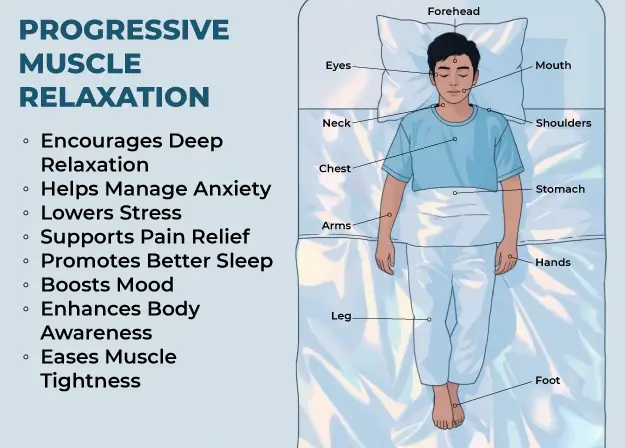
Jacobson’s Progressive Muscle Relaxation (JPMR) for Anxiety Relief

Core Principles of JPMR

JPMR for Anxiety Relief, main or core principles:

  • Sequential Focus: The practice moves through major muscle groups in order, typically from the feet upward or vice versa, ensuring thorough relaxation.
  • Tension and Release: Each muscle group is tensed intentionally for about 5 seconds and then relaxed for 10–15 seconds to create a contrast that deepens the relaxation.
  • Controlled Breathing: Slow, deep breathing accompanies the muscle work to amplify relaxation.
  • Mindful Attention: Practitioners focus on the sensations of tension and relaxation, heightening body awareness and stress relief.

Step-by-Step Guide to Practicing JPMR

Let’s learn how to practice Jacobson’s Progressive Muscle Relaxation – JPMR for Anxiety Relief.

  1. Find a Comfortable Space: Sit or lie down in a quiet, calm environment.
  2. Feet & Toes: Curl your toes downward tightly, hold for 5 seconds, then relax.
  3. Calves: Flex feet upward to tense calves, hold, then release.
  4. Thighs: Tighten your thigh muscles by squeezing or pushing heels down, then relax.
  5. Buttocks: Squeeze the muscles in your buttocks, hold, then let go.
  6. Stomach/Abdomen: Pull in your abdomen firmly, hold, then relax.
  7. Chest: Take a deep breath, expand your chest, hold, then breathe out and relax.
  8. Back: Arch your lower back gently, tense, then relax.
  9. Hands: Clench your fists one at a time, hold tension, then release.
  10. Forearms: Flex your forearms by bending wrists upward, hold, then relax.
  11. Arms & Shoulders: Tense biceps by bending elbows, then triceps by straightening arms, relaxing after each.
  12. Shoulders: Shrug shoulders toward ears, hold, then relax.
  13. Neck: Gently press your head back against support, then tilt toward chest, holding and releasing tension.
  14. Jaw: Clench teeth gently, hold, then relax.
  15. Mouth: Open mouth wide, tense, then relax.
  16. Eyes: Squeeze eyelids shut tightly for a few seconds, then relax.
  17. Forehead: Raise eyebrows or wrinkle forehead, tense, then release.
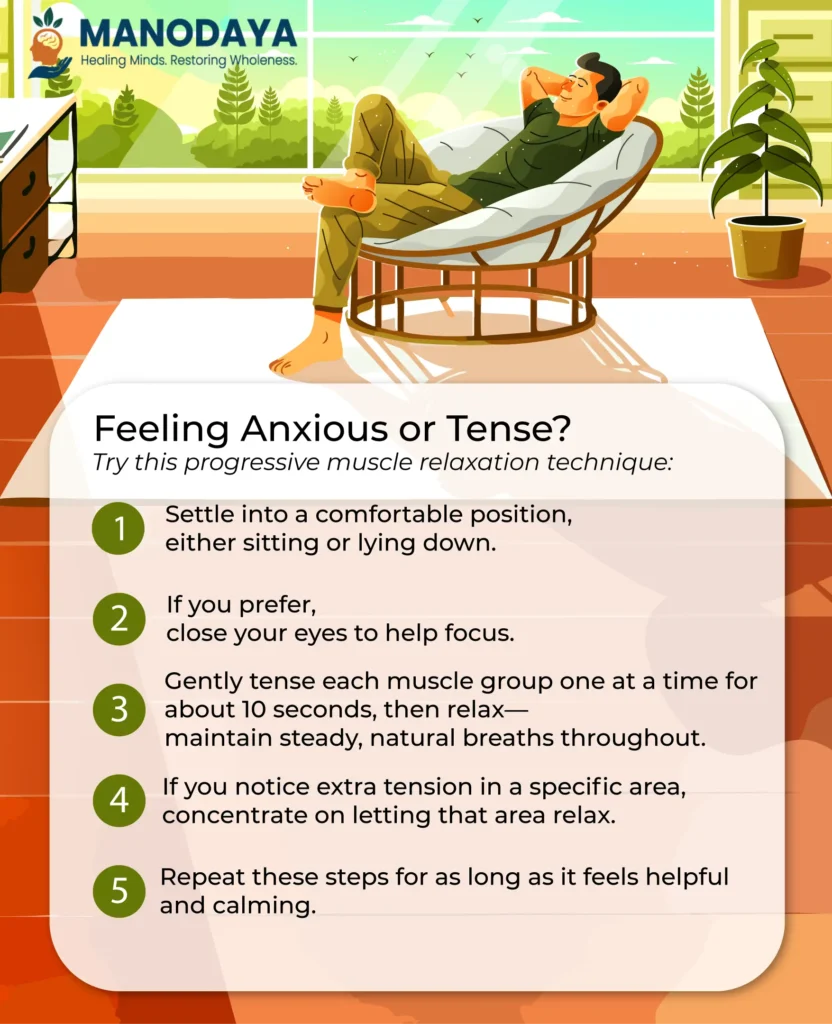
Person-practicing-Jacobsons-Progressive-Muscle-Relaxation-JPMR-by-tensing-and-relaxing-muscles
Jacobson’s Progressive Muscle Relaxation (JPMR) for Anxiety Relief – Guide

Practice Tips

Tips while doing Jacobson’s Progressive Muscle Relaxation (JPMR)

  • Move slowly and methodically, paying close attention to the feelings of tension and relaxation.
  • Inhale slowly as you tense muscles and exhale as you relax them.
  • Avoid any movement that causes pain; skip any muscle group that feels uncomfortable.

Benefits of Jacobson’s PMR for Anxiety Relief

Jacobson’s Progressive Muscle Relaxation (JPMR) for Anxiety Relief provides different benefits to mental and physical.

  • Significantly reduces stress and anxiety levels
  • Increases body awareness and mind-body connection
  • Improves overall sleep quality
  • Helps relieve chronic muscle tension and physical pain

Safety Notes

While doing Jacobson’s Progressive Muscle Relaxation (JPMR)-

  • Never tense a muscle so much that it causes pain.
  • Consult your healthcare provider before beginning JPMR if you have any musculoskeletal, joint, or nerve conditions.
  • Regular practice, guided by photos or videos, enhances effectiveness and ease of use.

Enhance your anxiety relief routine today with Jacobson’s Progressive Muscle Relaxation (JPMR), a simple yet powerful technique to bring calm and ease to your mind and body.

Experience calm in just a few minutes.
Start practicing Jacobson’s Progressive Muscle Relaxation today to reduce anxiety, ease tension, and restore balance to your mind and body.

Need any help?


Ready to feel better? Take your first step toward mental wellness now. Book You consultation now. Online & Home Visit Consultation Avaiable. Book Your slots now.


Related Posts

October 12, 2025

Stress is a growing issue worldwide, impacting daily life and relationships. While most people know that stress leads to irritability, fatigue, and tension, few realize how deeply it can affect their sex life. The relationship between sex and stress is complex—stress can dampen desire, but healthy intimacy can also relieve anxiety and promote mental wellness. How Stress Impacts Sexual Desire Persistent stress often leads to low sex drive. Emotional overwhelm, chronic anxiety, and poor self-image can all reduce sexual desire, creating a feedback loop: less sex leads to fewer feel-good hormones, which can increase emotional distance and stress. The Science: Hormones and Libido When stress is high, cortisol (the stress hormone) disrupts testosterone, estrogen, and progesterone—key hormones for sexual arousal. Chronic stress can cause difficulties with arousal, decrease sensitivity, and interfere with orgasm. Both men and women may notice these physical changes, which are rooted in biology—not just the mind. How the Brain and Hormones Respond to Sex and Stress The amygdala, our brain’s emotional center, becomes hyperactive with stress and can inhibit pleasure responses. When sex is emotionally safe and consensual, dopamine, oxytocin, and endorphins are released. These chemicals lower cortisol, improve mood, and make us feel secure and attached. Can Sex Relieve Stress and Anxiety? For many, yes. Sex can be a powerful tool for stress relief, especially within a healthy, communicative relationship. Benefits include: But intimacy shouldn’t be forced or pressured—real relief comes from consensual, supportive connections. Other Ways Intimacy Balances Sex and Stress Sex, Stress, and …

The-Connection-Between-Sleep-Hygiene-and-Mental-Health
July 12, 2025

Your sleep hygiene habits directly influence your mental health. Poor sleep increases anxiety, mood swings, and mental fog, while good sleep hygiene helps stabilize mood, reduce stress, and sharpen focus (DIVA Portal, mymichigan.org). How Sleep Affects Mental Health How to Improve Sleep Hygiene for Mental Wellness 12 Proven Sleep Hygiene Tips How Nutrition Supports Sleep Quality Why This Matters: Sleep & Mental Health Outcomes Meta-analytic research shows that sleep interventions produce a medium-sized improvement in mental health metrics (g ≈ –0.53), including reductions in depression and anxiety. The earlier and more effectively sleep quality is improved, the better the mental health outcomes (PMC). Another study found strong correlations between sleep hygiene elements—like a routine, calming routine, and sleep environment—and improved mental ability scores in insomniac patients (Lippincott Journals). When to Seek Professional Guidance If you’ve tried improving these habits but still experience significant sleep disturbance—such as ongoing anxiety, persistent fatigue, or daytime dysfunction—it’s time to consult a psychiatrist or sleep specialist. Interventions like Cognitive Behavioral Therapy for Insomnia (CBT‑I) can be highly effective (Wikipedia). Final Word By making conscious adjustments to your sleep habits—rituals, routines, environment, and nutrition—you lay a firm foundation for emotional balance, reduced stress, and enhanced clarity. Strong sleep hygiene isn’t just about rest—it’s a key pillar of mental wellness.

online psychiatrist consultation Kerala
July 12, 2025

Why Digital Wellbeing Matters Today More people now use the internet than regularly brush their teeth—a striking analogy highlighting that digital hygiene is as important as personal hygiene. How we manage screen time, online habits, and our social media activity affects our mental, physical, and social well-being. Platforms like Instagram, Facebook, and YouTube serve as vital tools for connection, self-expression, and information. Yet, it’s essential to develop a balanced and mindful relationship with tech to protect our emotional health and stay present. Understanding Social Media’s Impact on Mental Health Social media has a powerful influence on our emotions and behavior—both uplifting and potentially harmful: ✅ Positive Effects ⚠️ Negative Effects How to Improve Your Digital Wellbeing To maintain healthier tech habits, try implementing the following strategies: 1. Set Intentional Boundaries Schedule offline time and unplug after work hours to reclaim control over your attention and life. 2. Take a Digital Detox Disconnect over the weekend or restrict social platforms to specific days. Track how your mood, focus, and energy respond in a journal. 3. Mute Non-Essential Notifications Disabling unnecessary alerts—especially during social interaction or focused tasks—reduces stress and keeps your concentration intact. 4. Choose Healthier Evening Activities Replace bedtime scrolling with: 5. Build Mindful Digital Habits ✏️ Pro Tips for Sustainable Wellbeing Balancing the Digital and the Physical True digital wellbeing is about choice, not absence. It means leveraging tech for connection and knowledge while safeguarding our wellness through intentional habits. “Balance is not something you find—it’s something you create.” …

Feeling Overwhelmed by Anxiety? You’re Not Alone
July 12, 2025

If you’re feeling overwhelmed by anxiety, know that you’re not alone. Anxiety can be intense, but grounding techniques offer effective, immediate relief. In this post, you’ll discover mental and physical strategies to stay calm—especially during an anxiety attack. Why Anxiety Happens—and Why Grounding Works Anxiety kicks in when our amygdala, the brain’s fear center, reacts strongly—triggering racing thoughts, rapid heartbeat, and panic. Grounding methods engage the prefrontal cortex, disrupting that fear response and helping you regain control . 3 Powerful Grounding Techniques for Anxiety Relief 1. Mindfulness & Breath Awareness 2. Breathwork: Box, 4‑7‑8 & Deep Breathing 3. Mental & Sensory Grounding: 5‑4‑3‑2‑1 Method Expand Your Grounding Toolkit 🔹 Visualization: Imagine a peaceful landscape—feel, hear, smell every detail to shift your mind.🔹 Physical Anchors: Grip something cold (ice cube, cold water) or textured to bring you back to the present (Self).🔹 Progressive Muscle Relaxation: Tense then release muscles—fists, shoulders, legs (Self).🔹 Sensory Walk or Tactile Grounding: Walk barefoot, hold a warm mug, touch soft fabric. How to Combine These Techniques for Maximum Effect This holistic approach helps both mind and body stay anchored. Building Your Personalized Anxiety Relief Plan When to Seek Professional Support Grounding methods are powerful first steps, but persistent anxiety may require professional help. Reach out to a psychiatrist or mental health expert if anxiety significantly affects your daily life.